
The GBP/USD pair strengthened toward 1.3555 during early European trading on Monday as the US Dollar weakened following softer US economic data and reduced expectations for another Federal Reserve rate hike. The Pound also benefited from a relatively hawkish stance from the Bank of England, keeping the currency supported ahead of important UK employment and inflation data due later this week. Recent US economic indicators have weakened the case for additional monetary tightening. US retail sales declined in July for the first time in nine months as the boost from large tax refunds faded, pointing to some moderation in consumer spending. The softer retail activity came alongside unexpected job losses and subdued core inflation, strengthening expectations that the Federal Reserve may prefer to keep interest rates unchanged at its September meeting Market expectations for a September Fed rate hike have consequently declined. The shift has reduced demand for the US Dollar and provided additional support to GBP/USD.
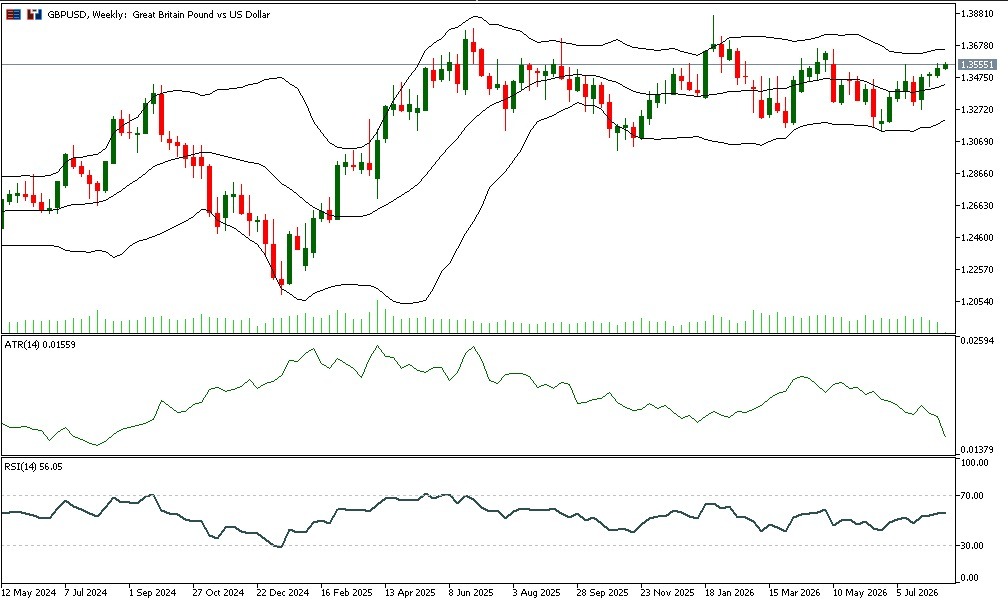
The weaker US data also raises questions about the strength of consumer demand during the third quarter. A sustained slowdown in household spending could reduce inflationary pressure and give the Federal Reserve greater flexibility to maintain its current policy stance. However, policymakers are likely to remain cautious until they receive clearer evidence that inflation is moving sustainably toward the central bank’s target. On the UK side, the Pound has found support from stronger-than-expected economic growth and a relatively hawkish Bank of England outlook. BoE Chief Economist Huw Pill stated that stronger UK economic activity supports the case for maintaining higher borrowing costs to bring inflation back toward target.
UK GDP expanded by 0.4% in the second quarter, exceeding expectations and reducing concerns that the economy is heading toward a sharp downturn. The stronger growth figure gives the Bank of England greater room to maintain restrictive monetary policy if inflationary pressures remain persistent. The policy divergence between the Federal Reserve and Bank of England is therefore becoming an important driver for GBP/USD. If US economic data continues to weaken while UK growth and inflation remain firm, expectations for a more cautious Fed could widen the relative interest-rate advantage of the Pound.
However, the outlook remains dependent on upcoming UK economic releases. Traders will closely monitor the employment report for evidence of labor-market strength and the latest inflation figures for clues about the BoE’s future policy direction. A stronger-than-expected inflation reading could reinforce expectations for higher UK rates and provide further support to Sterling, while softer data could limit the Pound’s gains. From the US side, upcoming inflation, employment, and consumer spending indicators will remain crucial for determining the Fed’s next policy move. Any signs of renewed inflation or stronger economic activity could revive rate-hike expectations and provide support to the Dollar.