
The global energy landscape remains gripped by volatility as West Texas Intermediate (WTI) crude oil prices climbed on Friday, driven by a deepening diplomatic and military impasse in the Middle East. Despite a standing ceasefire, the ongoing friction between the United States and Iran has effectively throttled one of the world’s most critical transit points for energy, keeping market participants on high alert. WTI crude futures for June delivery edged 0.8% higher to reach $105.89 a barrel by Friday morning. This follows an earlier session gain where prices rose 58 cents, or 0.6%, to $105.65. The benchmark is currently on track to finish the week with a staggering 11.8% gain, underscoring the market’s sensitivity to the continued disruption of shipments through the Strait of Hormuz a chokepoint responsible for approximately 20% of the world’s oil and liquefied natural gas supply.
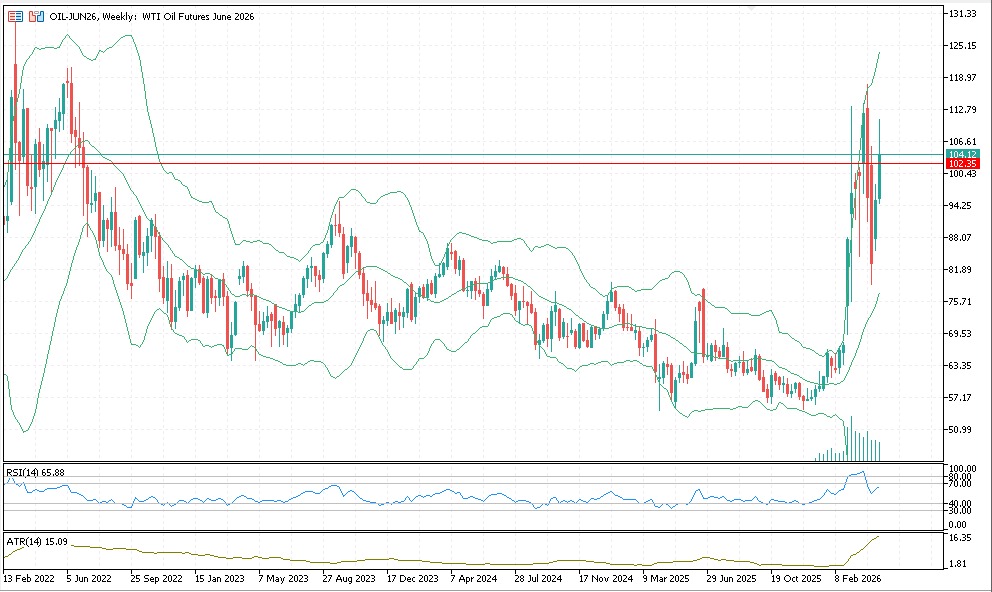
The current price surge is a direct reflection of the “dual blockade” currently paralyzing the Persian Gulf. While Tehran continues to block the Strait, the U.S. Navy has moved to block exports of Iranian crude. This standoff has persisted since the end of February, pushing oil prices to their highest levels since the 2022 Russia-Ukraine crisis. Although a ceasefire has been technically in place since April 8, recent rhetoric from both sides suggests a resolution is far from imminent. Iranian Foreign Ministry spokesman Esmaeil Baghaei recently characterized expectations for a quick breakthrough in U.S.-led talks as “unrealistic,” a sentiment reinforced by a rare statement from Iran’s Supreme Leader, Mojtaba Khamenei. In a defiant address, Khamenei asserted that Iran would maintain control over the Strait of Hormuz to safeguard its nuclear and missile interests. On the American side, President Donald Trump has signaled that the naval blockade will remain as a tool of economic pressure, even as he reviews military options ranging from the forced reopening of the Strait to special forces operations targeting nuclear facilities. The prospect of prolonged production shut-ins among Persian Gulf producers has created a floor for prices, as the industry braces for an extended deadlock. With regional leaders like UAE presidential adviser Anwar Gargash warning that no unilateral Iranian arrangements can be trusted regarding freedom of navigation, the path toward de-escalation remains obscured by mutual distrust and strategic posturing. As the conflict crosses the two-month mark, WTI prices continue to serve as a high-stakes barometer for the world’s most volatile geopolitical theater.