

Gold prices came under pressure on Friday, declining around 1.1% to approximately $4,044 per ounce as rebounding oil prices renewed inflation concerns. Despite the decline, gold remained on track for its strongest weekly performance since late August, supported by earlier weakness in the US dollar and Treasury yields.
Crude oil prices recovered as renewed Middle East supply and shipping security concerns supported market sentiment. Brent crude traded near $99 per barrel, while WTI approached $91. Higher energy prices can increase transportation and production costs, potentially keeping inflation elevated and limiting the Federal Reserve’s ability to reduce interest rates.
Investors are closely monitoring the October US Non-Farm Payrolls report, scheduled for release today. Market expectations indicate an addition of approximately 65,000 jobs, compared with 29,000 in the previous reading. The employment data will provide important insights into labour-market conditions and the Federal Reserve’s future monetary policy direction.
A stronger-than-expected employment report could reinforce expectations of higher interest rates, supporting the US dollar while putting pressure on gold. Conversely, weaker employment figures may increase expectations of monetary easing, potentially weakening the dollar and supporting precious metals. However, inflation trends will remain an important factor in the Fed’s decisions.
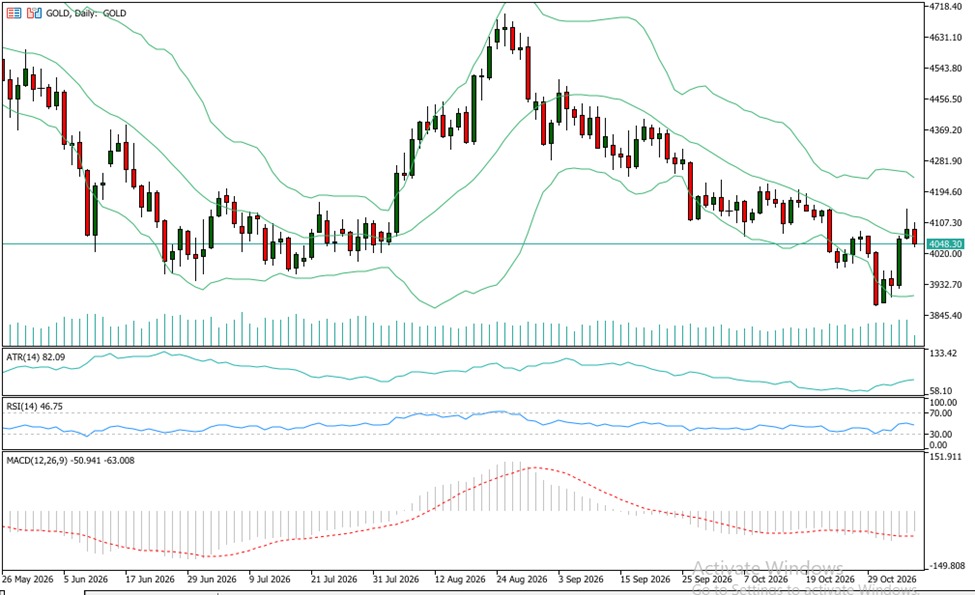
The US dollar and Treasury yields remain key drivers for precious metals. Earlier weakness in both indicators supported gold’s recovery above $4000. However, renewed inflation concerns and expectations of a prolonged restrictive monetary policy could limit further upside in bullion.
Silver, platinum and palladium also faced pressure amid changing interest-rate expectations and broader market volatility. Silver remains particularly sensitive to both investment demand and industrial activity, while platinum continues to depend on automotive demand and industrial consumption.
In the short term, gold may remain volatile as traders assess the impact of employment data, oil prices and Federal Reserve expectations. A weaker US dollar and lower yields could support further recovery, while stronger employment figures and persistent inflation may increase downside pressure. Geopolitical developments also remain a significant source of uncertainty for commodity markets.
Gold’s near-term direction will largely depend on the interaction between US employment data, inflation expectations and Federal Reserve policy. Meanwhile, crude oil remains sensitive to geopolitical developments and global supply risks.