

Gold prices were largely stable on Thursday after reaching a fresh two-month high in the previous session, supported by weaker-than-expected underlying signals from the latest U.S. inflation data. The softer inflation reading eased some of the immediate pressure on the Federal Reserve to consider raising interest rates anytime soon.
Gold climbed as much as 0.9% on Wednesday, briefly trading near $4,450 per ounce, its strongest level in more than two months, before giving up part of its gains.
The precious metal had already gained around 1% following the release of U.S. consumer price data showing that CPI increased just 0.1% month-on-month in July, in line with market expectations. The relatively modest increase suggested that the energy shock associated with the Iran conflict had not yet translated into a significant acceleration in consumer inflation.
Following the CPI release, expectations for a near-term Fed rate increase declined. According to CME FedWatch, markets were assigning around a 38%-40% probability to a September rate hike, compared with approximately 46% before the inflation figures were released.
The Federal Reserve kept its benchmark interest rate unchanged at 3.50%-3.75% during its 5th meeting of the year on July 29, although three policymakers preferred an increase.
Market attention has now shifted toward today’s U.S. Producer Price Index (PPI) report due at 1730 HRS PKT, which could provide additional clues about inflationary pressures. Investors will also closely monitor upcoming employment and inflation data ahead of the Fed’s September policy meeting expected on Wednesday, September 16 at 2300 HRS PKT. Comments from Fed Chair Kevin Warsh at the Jackson Hole symposium later this month on August 27 could also provide insight into how policymakers are assessing the trade-off between inflation risks and economic growth.
Higher interest rates generally weigh on gold because the precious metal does not provide an interest or yield return to investors.
Despite the softer CPI figures, inflation risks have not disappeared. A renewed escalation in the Middle East could push crude oil prices higher and potentially reignite inflationary pressures, forcing the Federal Reserve to reconsider its policy stance.
Efforts to resolve the U.S.-Iran conflict and restore normal traffic through the Strait of Hormuz remain uncertain, while restrictions on the strategically important shipping route continue. Oil prices are on track for a weekly increase as markets monitor diplomatic efforts between Washington and Tehran.
The U.S. Dollar Index was largely unchanged near 99.96, providing little fresh direction for gold. Gold has also found support from renewed buying interest after maintaining levels above the psychologically significant $4,000 mark. Chinese demand has remained an important source of support, with the People’s Bank of China continuing its gold purchases and investor interest in bullion recovering following the earlier market decline.
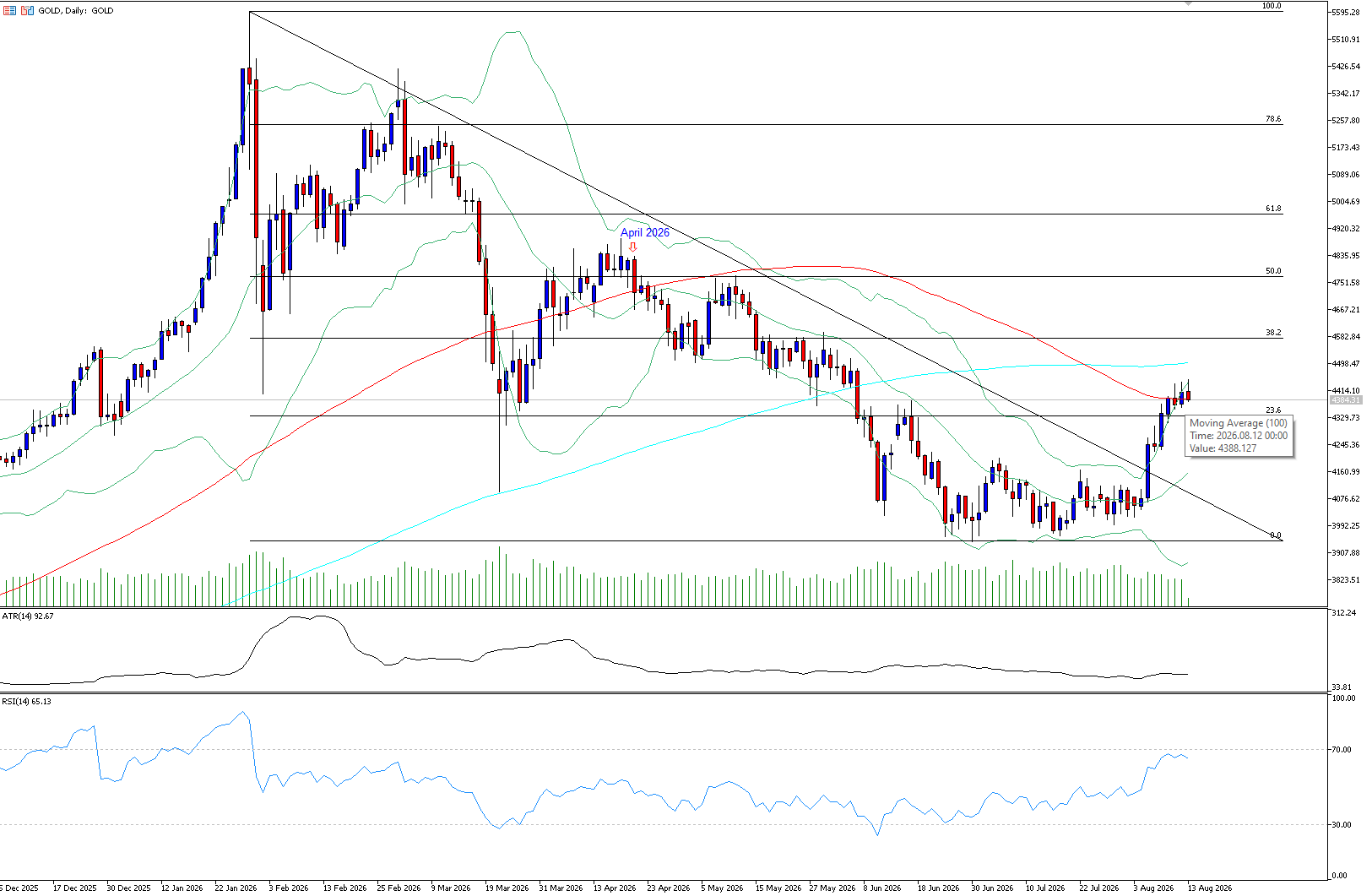
From a technical perspective, gold’s move above its 100-day moving average this week is another positive development. It was the first time the metal had traded above this level since April, strengthening the near-term technical outlook.