
Gold prices dropped on Wednesday morning in Asia, falling below the important $5,000 per ounce mark. Even though gold is usually seen as a safe place for money during times of trouble, it struggled to keep its value. Investors are currently feeling nervous as they wait for the Federal Reserve’s latest decision on interest rates, which is expected later today. The ongoing war between the U.S., Israel, and Iran is actually hurting gold more than helping it right now. Because the conflict has disrupted shipping in the Strait of Hormuz, oil prices have jumped to over $100 a barrel. This spike in energy costs is creating a “fear of inflation,” which usually means central banks will keep interest rates high for a longer time to keep prices under control.
This “higher-for-longer” approach to interest rates makes gold less attractive because it doesn’t pay any interest to those who hold it. Other metals like silver and platinum also saw their prices fall today. While gold had reached a massive record high of $5,600 back in January, it has been steadily losing ground as markets realize that interest rate cuts probably won’t happen until at least September. Furthermore, the recent escalation in the Middle East has created a “double-edged sword” for gold investors. While war usually drives people to buy gold for safety, the current conflict is causing a massive spike in energy costs that is hitting the global economy hard. Because oil is staying above $100 a barrel, central banks like the Reserve Bank of Australia have already started raising rates again to fight the resulting inflation. This puts gold in a difficult spot where its “safe-haven” status is being canceled out by the reality that higher interest rates make cash and bonds more attractive.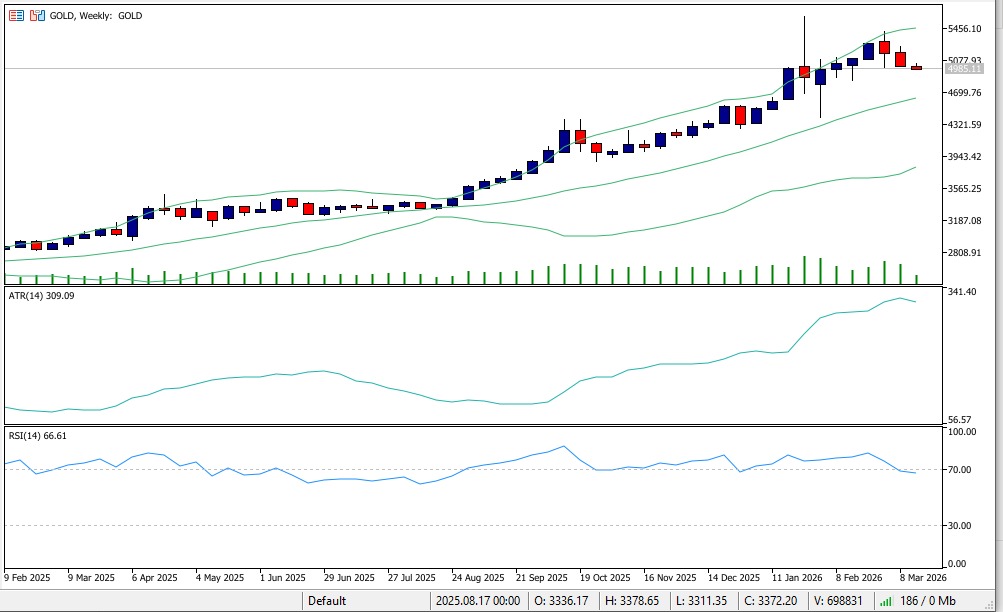
In addition to the Federal Reserve, a wave of other major central bank meetings this week is keeping the market on high alert. Decisions are expected from the Bank of Japan, the European Central Bank, and the Bank of England, all of which are dealing with the same inflationary pressures from the disrupted shipping lanes in the Strait of Hormuz. If these banks signal that they will keep rates high to offset rising energy prices, gold could see even further declines. Investors are now bracing for a “higher-for-longer” interest rate environment that could last well into the end of the year.
Finally, the technical outlook for gold has shifted significantly since its record-breaking start to the year. After hitting an all-time high of $5,600 in late January, the metal has been “nursing a sharp fall” as the initial excitement over potential rate cuts has evaporated. With markets now pricing out any chance of a rate reduction until September at the earliest, gold is struggling to find a solid floor. Until there is more clarity on whether inflation is truly under control or if the geopolitical situation stabilizes, precious metals are likely to remain under pressure.