

Gold prices traded modestly higher on Monday as weaker Treasury yields and a softer U.S. dollar boosted demand for the precious metal. Investors are gauging inflation expectations after oil prices retreated on easing geopolitical tensions in the Middle East. Spot gold climbed 1.1% to $4,095 per ounce while August gold futures rose 0.7% to $4,097 per ounce.
Gold found additional support as oil prices dropped sharply, erasing much of last week’s geopolitical risk premium that had briefly lifted Brent crude toward the $100-per-barrel level. At the same time, U.S. Treasury yields declined, with the benchmark 10-year Treasury yield on course for its steepest daily fall in nearly a month, enhancing the appeal of non-yielding assets such as gold.
Bullion benefited from a weaker U.S. dollar, as the U.S. Dollar Index retreated against a basket of major currencies. Weaker greenback makes gold more affordable for holders of other currencies, supporting global demand.
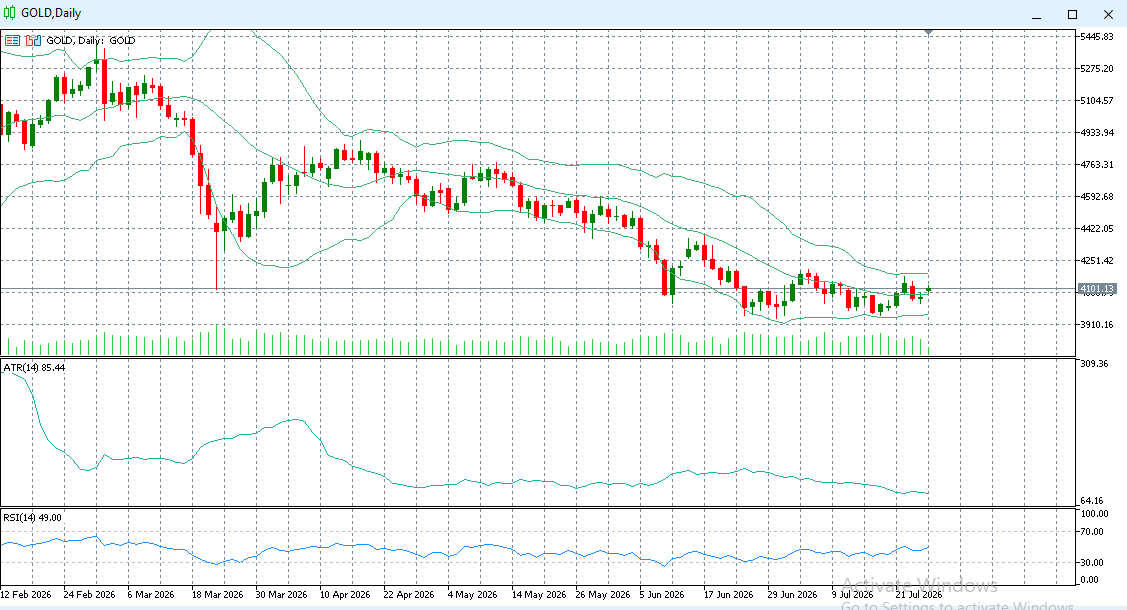
The shift in market sentiment followed a pause in hostilities between the United States and Iran over the weekend, raising optimism that diplomatic efforts could pave the way for a more durable ceasefire. After 13 consecutive nights of U.S. strikes on Iranian targets, President Donald Trump suspended the military campaign late Friday, while Iran refrained from retaliatory attacks against neighboring countries hosting U.S. military bases.
Attention has now turned to the Federal Reserve’s policy decision later this week. Although the decline in oil prices may help ease inflationary pressures, investors are looking to the Fed for guidance on the economic outlook and the future path of interest rates following recent market volatility.
The Federal Reserve is widely expected to keep interest rates unchanged at its policy meeting on Wednesday, although CME FedWatch data still indicates roughly a one-in-three probability of a rate hike. Market participants will closely watch Fed Chair Kevin Warsh’s post-meeting remarks for fresh insights into the timing of potential rate cuts and the central bank’s assessment of inflation risks.
Investors will also turn their attention to upcoming U.S. economic releases, particularly inflation and labor market data, which could provide additional guidance on the Fed’s future policy direction.
The outlook for U.S. interest rates remains a key driver for gold prices, as the non-yielding precious metal generally faces headwinds when interest rates remain elevated, increasing the opportunity cost of holding bullion.