
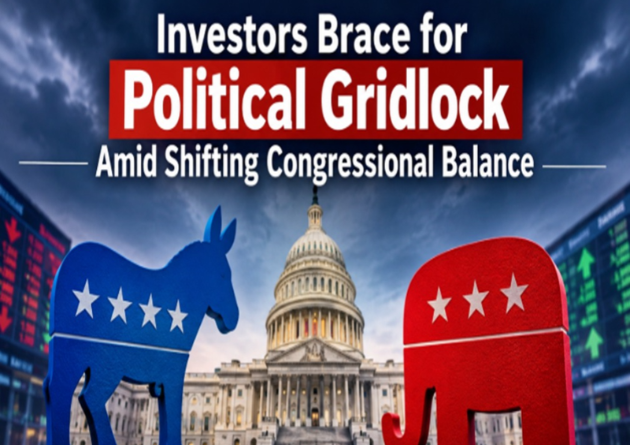
Global equity markets fluctuated on Wednesday as investors assessed the potential impact of increased regulation, higher taxes and tighter oversight of sectors such as artificial intelligence (AI) following Democratic gains in the US midterm elections.
With Democrats gaining control of both chambers of Congress, investors anticipate potential legislative gridlock between President Donald Trump’s administration and the opposition-controlled Congress, creating uncertainty around the administration’s economic and policy agenda.
The outcome could have significant implications for AI infrastructure, data-center investments, defense spending, healthcare and banking regulation. A Democratic-led Congress may intensify scrutiny of major technology companies, particularly amid growing opposition to AI data-center expansion, although analysts see limited chances of legislation severely restricting the sector.
Despite the shift in congressional control, Trump retains considerable influence over financial markets through trade and tariff policies, foreign affairs and existing regulatory powers. Even with a potential Democratic sweep, the party is unlikely to secure the two-thirds congressional majority required to override President Trump’s vetoes, potentially limiting its ability to advance legislation during the remaining two years of his presidency.
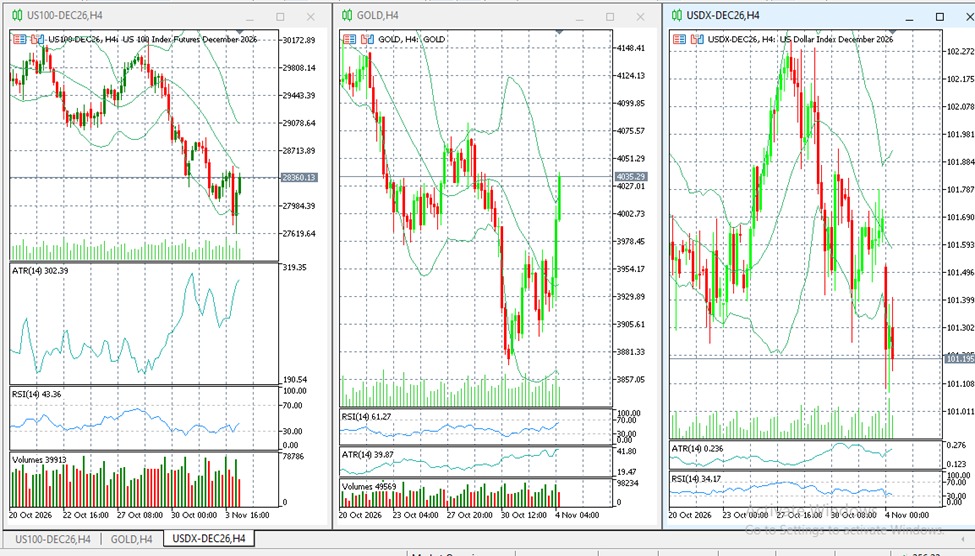
Stock index futures initially tumbled as election results began to emerge but later recovered some ground on Wednesday, with S&P 500 futures trading 0.5% lower and Nasdaq futures declining 0.8%. Meanwhile, the US Dollar Index, which tracks the greenback against a basket of six major currencies, slipped 0.2%, reaching a one-month low of 101.51.
Investors also closely monitored state-level election results for their potential impact on AI infrastructure expansion, particularly in Texas. Democratic candidates James Talarico and Gina Hinojosa secured victories in key Senate and gubernatorial races, respectively, while Democrats Keisha Lance Bottoms and Jon Ossoff also won Georgia’s gubernatorial and Senate contests.
According to market strategists, Texas and Georgia together account for approximately one-third of US AI data-centre investments and projects. Consequently, the possibility of increased regulatory scrutiny or delays in infrastructure development could weigh on the broader AI sector. Although such developments are unlikely to bring the AI expansion to a complete halt, they could potentially slow its growth momentum.
The White House retains considerable authority over foreign policy and the implementation of tariffs without congressional approval, although several Supreme Court rulings earlier this year have placed certain limitations on its powers.
According to ANZ economists, the election outcome could encourage countries such as India, which are still negotiating trade agreements with the United States, to adopt a cautious, wait-and-see approach while assessing the potential implications for future trade relations.
Meanwhile, investors will closely monitor the relationship between US President Donald Trump and Chinese President Xi Jinping, with some market participants expecting existing bilateral tensions to remain broadly unchanged.
Investors are also anticipating greater legislative gridlock, with Democrats controlling both chambers of Congress. This could delay budget negotiations, intensify uncertainty surrounding the US fiscal outlook and weigh on asset prices. It may also create challenges for the AI sector, which has been a major contributor to US economic growth.