

Oil prices climbed to near six-month highs on Friday as growing concerns over a potential resumption of US military action against Iran dampened hopes of a diplomatic breakthrough and heightened fears of further disruptions to global energy supplies.
Brent crude futures advanced 2.1% to $117.19 per barrel, while US West Texas Intermediate (WTI) crude rose 1.8% to $103.88 per barrel. Earlier in the session, Brent touched $117.84, its highest level since late April, as traders assessed the potential implications of escalating geopolitical tensions for global oil supplies.
Both benchmarks remained on track to record their fourth consecutive monthly gain of more than 10%, reflecting sustained upward pressure from geopolitical uncertainty, supply disruptions and concerns surrounding the security of key energy infrastructure.
According to a report by The Wall Street Journal, US Central Command chief Admiral Brad Cooper briefed President Donald Trump on potential military options involving Iran during a White House meeting on Thursday. The meeting was also attended by Defence Secretary Pete Hegseth and other senior officials, with discussions reportedly covering the ongoing US blockade and the possibility of renewed large-scale military operations.
Trump has also indicated that further military action against Iran remains a possibility following the November 3 US midterm elections. On Wednesday, he said that “anything’s possible” when questioned about the prospect of additional strikes, adding to uncertainty surrounding the future direction of the conflict.
These developments have weakened expectations of an immediate diplomatic resolution, despite ongoing efforts by Washington and regional mediators to bring both sides back to the negotiating table. US Vice President JD Vance has reportedly contacted Iranian security official Mohsen Rezaei as part of efforts to revive negotiations, while mediators continue working on a potential framework to end the conflict. However, Tehran’s reported rejection of a proposed settlement has further complicated prospects for a near-term agreement.
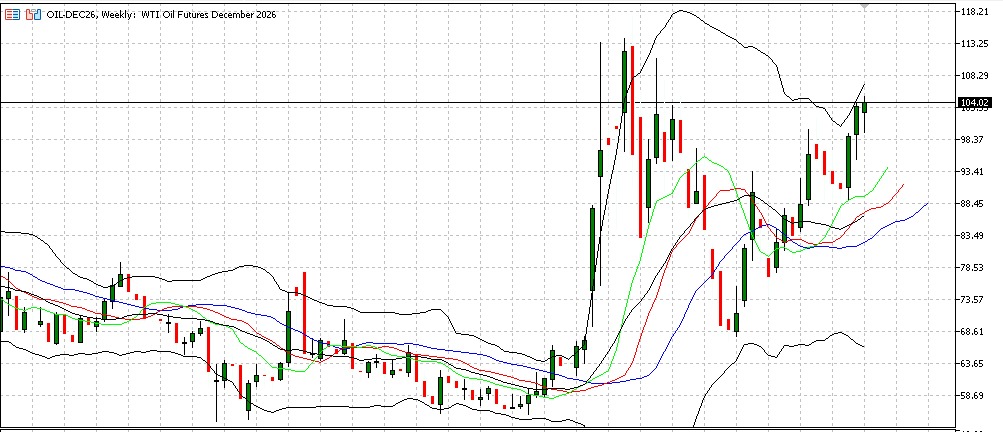
Market participants are particularly focused on developments surrounding the Strait of Hormuz, one of the world’s most strategically important oil transit routes. Any prolonged disruption to shipping through the narrow waterway could significantly affect global crude supplies, given its importance in transporting oil from major Middle Eastern producers to international markets. Consequently, concerns over the security of the route continue to support a geopolitical risk premium in oil prices.
Regional security concerns have also intensified following reports that Saudi Arabia’s air defence systems intercepted another ballistic missile launched by Yemen’s Iran-aligned Houthi movement towards the kingdom’s Eastern Province. The Saudi Press Agency reported the incident on Thursday, following Houthi claims of an attack on the Ras Tanura refinery earlier this week. Continued threats to energy infrastructure across the region have added to concerns about the stability of oil production and transportation networks.
On the supply front, recent US inventory data provided additional support to crude prices. According to the Energy Information Administration (EIA), US commercial crude oil inventories declined by 1.9 million barrels in the week ended October 23, reaching 410.6 million barrels. The unexpected drawdown contrasted with market expectations for a modest increase, suggesting stronger-than-anticipated demand or tighter near-term supply conditions.
Looking ahead, oil market direction is likely to remain heavily influenced by developments in US-Iran relations, the security situation across the Middle East and the flow of crude shipments through the Strait of Hormuz. While any progress towards diplomatic negotiations could ease supply concerns and limit further price gains, renewed military escalation or additional disruptions to regional energy infrastructure could push crude prices higher. Traders will also monitor upcoming US inventory figures and broader global demand indicators for further signals about the market’s supply-demand balance.