

Oil prices extended their losses on Wednesday, falling more than 2% as reports of progress in Middle East diplomatic efforts raised hopes of de-escalation in the conflict and a possible reopening of the strategically important Strait of Hormuz.
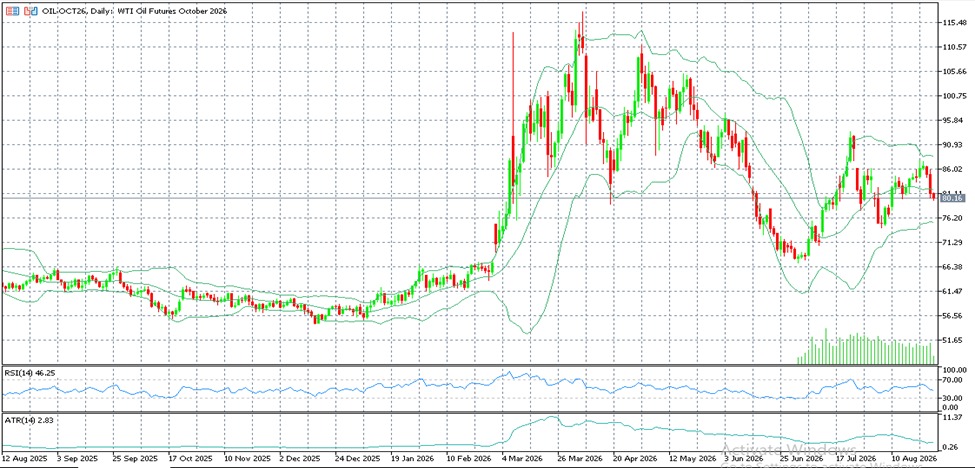
The global oil benchmark declined 2.6% to $86.30 a barrel, while U.S. West Texas Intermediate (WTI) crude futures fell 2.7% to $80.18 a barrel.
The decline followed a sharp selloff on Tuesday, when oil prices dropped more than 5% after Russian media reported that the U.S. and Iran were nearing a new ceasefire agreement. Russia’s state-owned RIA Novosti cited Pakistani and Iranian sources in its report, although the claims had not been independently verified.
According to the report, the potential agreement could include the restoration of free navigation through the Strait of Hormuz, with an announcement potentially expected in the coming days.
The reports came as Pakistan continued its mediation efforts between the U.S. and Iran. Pakistani officials said earlier this week that progress had been made in negotiations with Tehran, including discussions over the possibility of restoring an interim ceasefire. Pakistan has played a significant diplomatic role in the conflict and previously helped facilitate a ceasefire between the two sides in June.
Meanwhile, an Iranian official reportedly said that Iran and Oman had agreed on a temporary navigation arrangement through the Strait of Hormuz following diplomatic discussions in Tehran. However, the official indicated that a full reopening of the waterway would depend on the U.S. fulfilling commitments under the framework ceasefire agreement reached in June.
The possibility of renewed commercial traffic through the Strait of Hormuz has added downward pressure on crude prices, as the reopening could ease concerns over global oil supply disruptions. However, analysts cautioned that the geopolitical risks surrounding the region remain elevated.
Analysts at Vital Knowledge noted that the possibility of renewed conflict remains high, suggesting that oil prices may not return to their pre-conflict levels. They argued that a lasting geopolitical risk premium is likely to remain embedded in crude prices.
Similarly, Analysts at ING warned that the agreement between Iran and Oman does not necessarily signal a full normalization of oil shipments through the strategic chokepoint. They said that the U.S. would likely need to ease restrictions on Iranian ports and sanctions against Tehran before oil flows could return to normal levels.
Meanwhile, tanker activity through the Strait of Hormuz has fallen sharply as shipping companies remain reluctant to expose vessels to potential attacks. Preliminary data from Kpler, cited by CNBC, showed that only five commodity vessels passed through the strait on Tuesday, compared with a 10-day average of 15 vessels.
The Strait of Hormuz remains one of the world’s most important energy corridors. Before the conflict began in late February, approximately one-fifth of global oil and liquefied natural gas supplies moved through the waterway.
The latest Iran-Oman diplomatic discussions also followed the U.S. decision to impose tougher economic sanctions on Tehran, signaling that Washington may be placing greater emphasis on economic pressure and negotiations rather than further military escalation.