
Global oil prices climbed sharply on Friday amid rising concerns that tensions between the United States and Iran could escalate into a prolonged conflict. Comments from Donald Trump indicating there was no urgency to finalize a peace agreement added to market uncertainty, prompting traders to factor in sustained geopolitical risk.
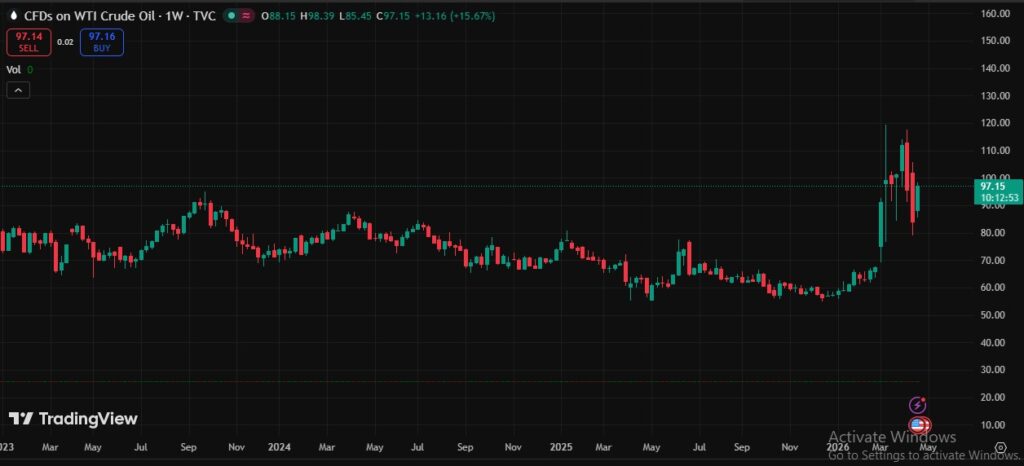
Benchmark crude prices reflected this sentiment, with Brent crude oil futures advancing 1.7% to $106.88 per barrel, while West Texas Intermediate crude gained 1.4% to $97.21 per barrel. Both benchmarks are on track to record their strongest weekly gains since early March, driven largely by supply concerns linked to the ongoing crisis.
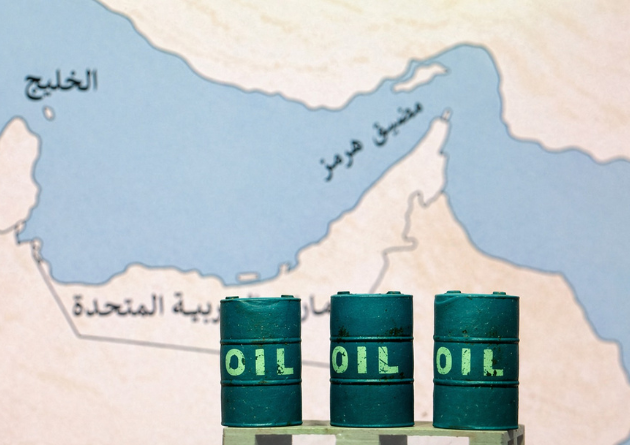
A key factor supporting prices has been the continued disruption in the Strait of Hormuz, a critical النفط transit route off Iran’s southern coast through which nearly 20% of global oil supply flows. Despite efforts by major producers such as Saudi Arabia and Qatar to explore alternative shipping routes, the strait has remained largely closed to tanker traffic for several weeks, pushing oil prices significantly above pre-conflict levels.
Recent developments suggest the standoff may persist despite a temporary ceasefire extension between the United States and Iran. Reports indicate that Iran has seized vessels attempting to transit the strait, while U.S. forces have intercepted Iranian ships accused of breaching an American naval blockade. These incidents have further heightened tensions and clouded the outlook for diplomatic resolution.
Adding to the uncertainty, President Trump stated that U.S. naval forces had been instructed to take decisive action against any Iranian attempts to mine the strait. This followed the release of footage by Iran showcasing its naval commandos and fast-attack capabilities, signaling its readiness to challenge maritime security in the region.
Separately, a three-week extension in the ceasefire between Israel and Lebanon was announced after negotiations in Washington. However, the development offered limited reassurance to global markets, which remain primarily focused on the broader risks to energy supply chains.
Looking ahead, analysts warn that continued instability in the Gulf region could sustain upward pressure on oil prices, particularly if disruptions in the Strait of Hormuz persist or intensify. Market participants are closely monitoring diplomatic signals and military activity, as any escalation could further constrain supply and amplify volatility across global energy markets.