
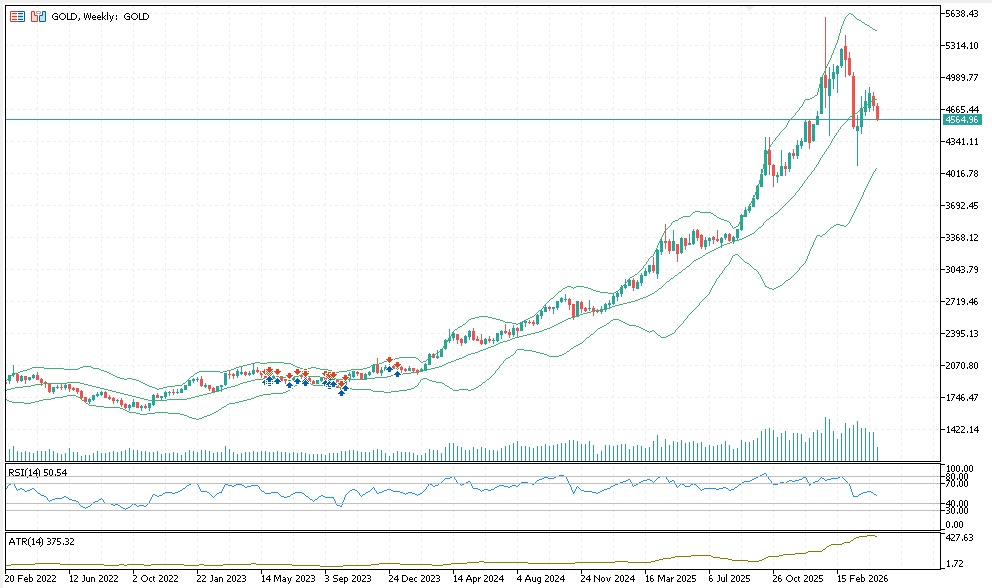
Gold prices (XAU/USD) fell by about 0.5% to around $4,570 during Wednesday’s European trading session. The decline came as oil prices continued to rise, driven by geopolitical tensions linked to the United States. According to reports, President Donald Trump has instructed officials to prepare for a possible extended blockade of Iran, which has added further uncertainty to global energy markets.
This situation is closely tied to the Strait of Hormuz, a crucial maritime route through which nearly 20% of the world’s oil supply passes. The ongoing blockade of Iranian sea ports raises concerns that this strategic waterway could remain disrupted for a longer period. Such disruptions typically push oil prices higher due to fears of limited supply in global markets.
Rising oil prices also have broader economic effects, particularly on inflation. Higher energy costs tend to increase overall inflation expectations worldwide. In response, central banks may choose to raise interest rates or keep them “higher for longer” to control inflation. This environment is generally negative for gold, as it is a non-yielding asset, meaning it does not provide interest income like bonds or savings instruments.
Meanwhile, investors are closely watching the upcoming monetary policy decision from the U.S. Federal Reserve. The Fed is widely expected to keep interest rates unchanged in the range of 3.50%–3.75% for the third consecutive meeting. However, policymakers are also likely to highlight concerns about rising inflation pressures and slowing economic growth due to higher energy prices.
Market participants are especially focused on Federal Reserve Chair Jerome Powell’s press conference for hints about the future direction of interest rates. According to the CME FedWatch tool, markets currently expect rates to remain steady through the end of the year, reflecting uncertainty about the global economic outlook amid ongoing geopolitical and energy market tensions.