

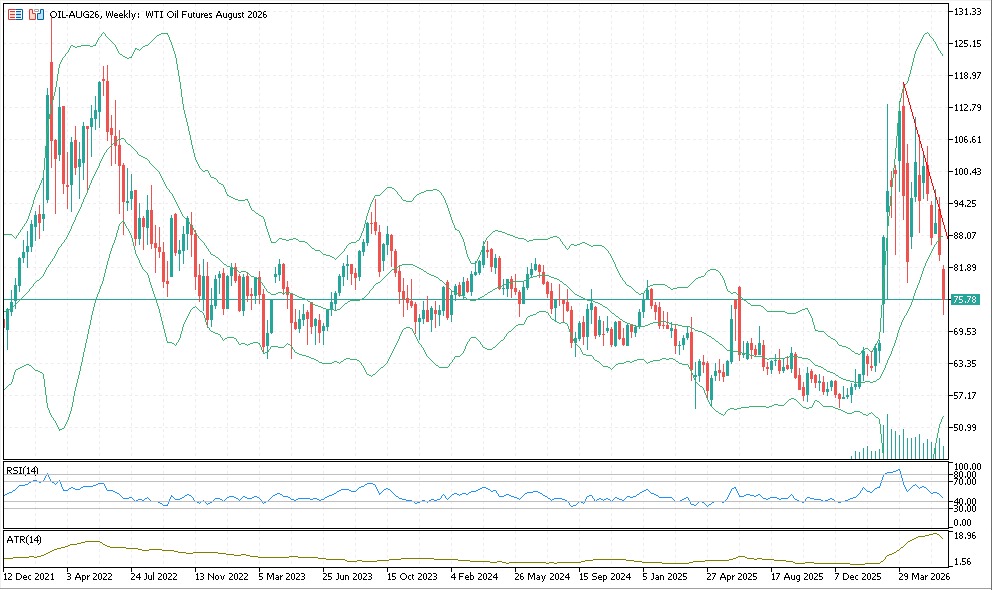
West Texas Intermediate (WTI) crude oil futures are on track for a steep weekly decline of over 7%, hovering near their lowest levels since early March. This dramatic downward pressure stems directly from the rapid implementation of the 14-point interim peace framework between the United States and Iran, which has sharply reduced the geopolitical risk premium that previously pushed crude prices above $120 per barrel. Despite a brief intra-day rally on Friday that pushed WTI crude futures up 2.0% to $78.15 per barrel following the administrative postponement of technical-level talks at the Bürgenstock resort in Switzerland, the broader market remains dominated by the sweeping de-escalation of the 15-week Middle East conflict.
The primary catalyst for this market shift is the immediate structural improvement in Persian Gulf shipping conditions. Following the electronic signing of the memorandum of understanding (MoU), President Donald Trump issued an official directive completely lifting the U.S. naval blockade on Iranian ports and fully authorizing the toll-free opening of the Strait of Hormuz to commercial shipping for a 60-day period. Under additional guidance from the U.S. Central Command and the Joint Maritime Information Center, restrictions on maritime traffic have been disassembled, and transit routes have been shifted closer to Oman’s coastline to bypass remaining mine hazards. Commercial oil tankers carrying millions of barrels of previously stranded crude oil officially began exiting the waterway on Thursday, signaling a rapid return of vital supplies to international markets.
The interim accord also introduces significant economic and regulatory changes designed to sustain the current ceasefire. Under the terms of the MoU signed by President Trump, the U.S. has granted immediate sanctions waivers to Iran’s fossil fuel sector, allowing the country to resume oil and fuel exports provided it adheres to strict compliance guidelines. Furthermore, the framework outlines a 60-day window for intense diplomatic negotiations regarding Iran’s nuclear program—specifically targeting the dilution of its highly enriched uranium stockpile under International Atomic Energy Agency supervision—and the potential establishment of a $300 billion regional economic rehabilitation fund. President Trump confirmed that while the U.S. will not provide direct capital to this fund, regional allies are permitted to invest, and billions in frozen Iranian assets overseas could be systematically released if specific verification criteria are met.
Despite these clear strides toward peace, underlying market crosscurrents are capping a full price collapse and creating significant volatility for energy traders. Geopolitical friction points linger, as Israel continues to execute targeted military strikes against Hezbollah positions in southern Lebanon, highlighting the fragile nature of regional stability. Simultaneously, broader macroeconomic headwinds are weighing heavily on aggregate demand forecasts. A hawkish stance from the U.S. Federal Reserve, combined with strong economic data indicating that interest rates will likely remain elevated for an extended period, has heightened concerns over slowed global economic growth. This combination of returning sea-borne supply and tighter central bank monetary policy is expected to keep WTI crude futures under continued pressure as the 60-day negotiation clock begins.