
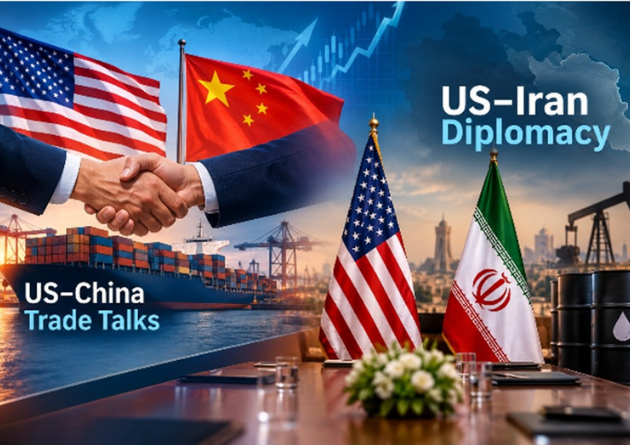
Global markets are entering a closely watched period as two major diplomatic developments unfold simultaneously. U.S. President Donald Trump is preparing to meet Chinese President Xi Jinping in Washington on September 24, while Trump and Iranian President Masoud Pezeshkian are both attending the United Nations General Assembly in New York. Developments on trade and Middle East diplomacy could influence investor sentiment, commodity prices and currency markets in the coming sessions.
The Trump–Xi summit will focus heavily on trade relations between the world’s two largest economies. Investors are watching whether the existing tariff truce can be extended and whether both sides can make progress on agricultural purchases, technology restrictions and critical minerals. The current trade arrangement is scheduled to expire on November 10, making the summit important for the near-term outlook for global trade.
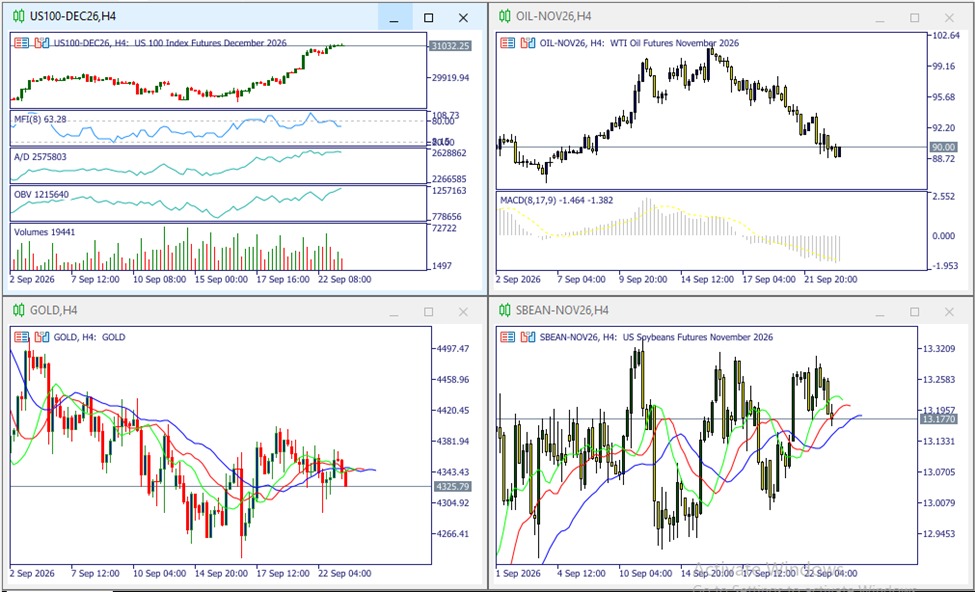
For equity markets, a constructive outcome from the U.S.-China meeting could reduce concerns over tariffs and supply-chain disruptions. Technology and semiconductor stocks may be particularly sensitive to any developments involving AI and advanced technology restrictions, while Asian markets could respond to changes in expectations for Chinese exports and economic activity. Traders should therefore focus on the actual commitments announced rather than the headline meeting alone.
Critical minerals and rare-earth supplies are another important market issue. China remains a major part of the global rare-earth supply chain, while the United States is seeking greater supply security. Any agreement that eases export restrictions could support technology and industrial companies, whereas renewed restrictions could increase supply-chain concerns and volatility in related sectors.
At the same time, the U.S.-Iran situation is creating a separate source of market uncertainty. Trump said on September 22 that discussions with Iran were continuing and expressed the view that a settlement could eventually be reached. Iranian officials have also indicated that the UN General Assembly could provide an opportunity to revive diplomacy, although significant differences remain between Washington and Tehran.
The most direct market impact from the U.S.-Iran developments is likely to come through oil and shipping routes. Iran has indicated that it could reopen the Strait of Hormuz if U.S. military pressure and the blockade are eased. Any credible progress toward reopening the route could reduce the geopolitical risk premium in crude oil, while renewed tensions or disruption could push energy prices and volatility higher.
Gold could also remain highly sensitive to developments in both stories. A reduction in geopolitical tensions and stronger risk appetite could reduce demand for traditional safe-haven assets, while renewed conflict or uncertainty could increase defensive buying. The U.S. dollar may also react to shifts in risk sentiment, making the combination of gold, oil and the dollar important indicators for traders during the diplomatic developments.
For emerging markets, the two events create both opportunities and risks. Improved U.S.-China trade relations could support global growth expectations and export-oriented economies, while progress between the U.S. and Iran could ease pressure on energy costs and shipping routes. Conversely, renewed tariff tensions or escalation in the Middle East could increase volatility across equities, currencies and commodities.
Overall, traders should monitor five key signals over the coming sessions: the outcome of the Trump-Xi meeting, tariff announcements, rare-earth and technology agreements, developments in U.S.-Iran diplomacy, and any changes regarding the Strait of Hormuz. Together, these factors could determine the direction of global risk sentiment, with equities and Asian markets sensitive to the U.S.–China outcome, while oil and gold remain particularly sensitive to developments surrounding Iran and regional security.