

The US Dollar Index (DXY), which measures the performance of the US Dollar against a basket of six major currencies, is trading near the 100.00 level during early European hours on Friday. The index remains supported amid renewed concerns over a potentially prolonged conflict in the Middle East, which has strengthened demand for safe-haven assets. Market participants are now closely monitoring the upcoming US March labor market report, expected to provide fresh directional cues for the Dollar.
Geopolitical tensions have intensified following remarks from Donald Trump, who stated that the core objectives of the ongoing conflict are nearing completion and could conclude within two to three weeks. He further warned of severe military action against Iran if it fails to agree to an unconditional surrender. In response, Iranian Foreign Minister Abbas Araghchi rejected such threats, asserting that external pressure would not force Tehran into submission and instead reflects strategic weakness on the opposing side.
The ongoing standoff between the United States and Iran has heightened uncertainty across global markets. In such environments, investors typically gravitate toward safe-haven currencies like the US Dollar, providing near-term support to the DXY. However, gains in the index may be limited by trade-related developments. According to reports, the US administration has introduced an executive order that could impose tariffs of up to 100% on certain imported pharmaceuticals if companies fail to comply with new policy
directives in the coming months.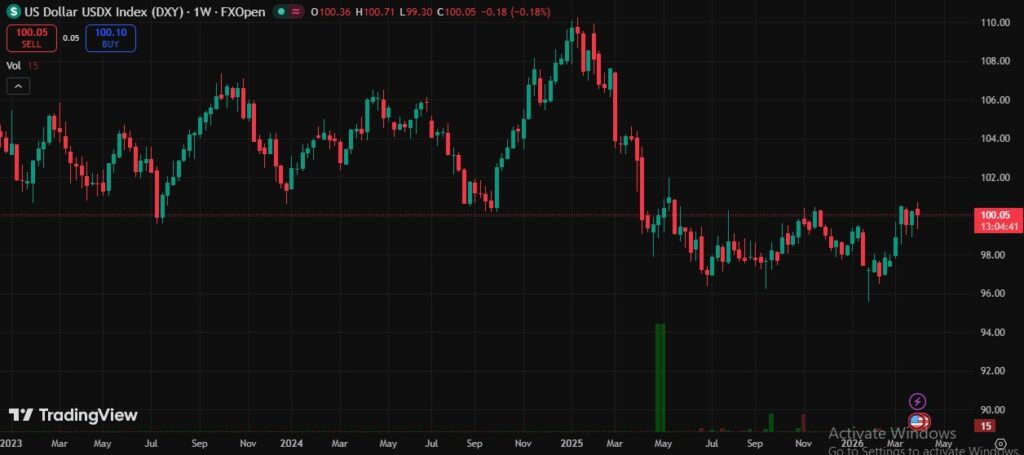
Looking ahead, investor focus remains firmly on the US employment data for March. The economy is expected to have added approximately 60,000 jobs, while the unemployment rate is projected to remain steady at 4.4%. A stronger-than-expected report could reinforce confidence in the resilience of the US economy and support further upside in the Dollar. Conversely, weaker labor market data may weigh on the currency, as it could signal slowing economic momentum and increase expectations of a more accommodative monetary policy stance.
In addition to labor data, broader macroeconomic and geopolitical developments will continue to shape market sentiment. Traders are likely to remain cautious, balancing the implications of economic indicators with evolving geopolitical risks. As volatility persists, the US Dollar is expected to remain sensitive to both risk sentiment and policy expectations in the near term.