
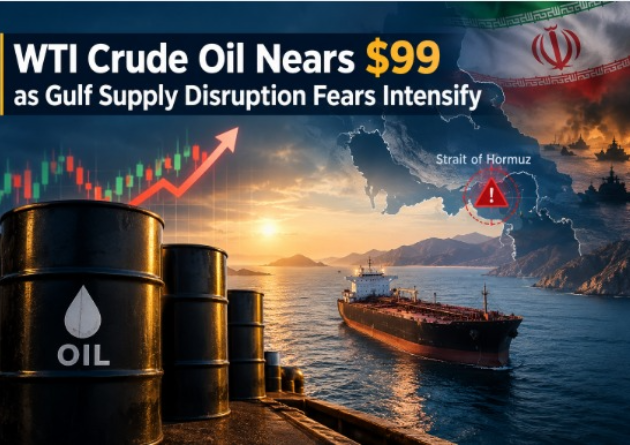
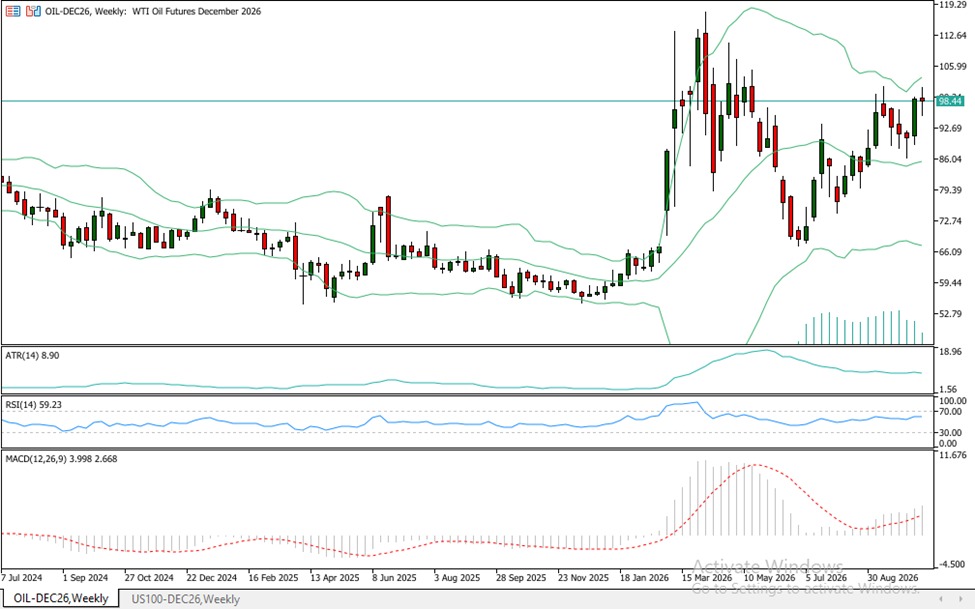
WTI crude oil prices resumed their upward trend on Wednesday, rising nearly 1% and approaching $99 per barrel as concerns over potential supply disruptions in the Gulf region intensified.
Oil prices gained support from increasing attacks on commercial vessels in the Strait of Hormuz, a critical global energy transit route. These developments have heightened fears of disruptions to international crude oil shipments.
Iran’s Islamic Revolutionary Guard Corps (IRGC) reported on Tuesday that two tankers caught fire after striking sea mines while attempting to cross the Strait of Hormuz through a route Tehran had not authorized.
Meanwhile, Yemen’s Iran-backed Houthi group claimed attacks on Saudi Aramco oil facilities in Yanbu, a Red Sea port that provides Saudi Arabia with an alternative export route that bypasses the Strait of Hormuz. Diplomatic efforts to secure a peace agreement between the United States and Iran have continued, but prospects for a breakthrough remain uncertain. A senior Pakistani military official arrived in Tehran on Tuesday in an attempt to mediate between the two sides and prevent further escalation.
However, US officials have expressed limited optimism about reaching a swift agreement. Secretary of State Marco Rubio indicated that negotiations remain difficult and that economic pressure on Iran would continue amid ongoing threats to commercial shipping.
Iranian Foreign Minister Abbas Araghchi stated that the Strait of Hormuz would remain closed until Washington accepted Tehran’s conditions. The continuing disagreement between the two countries has added uncertainty to the geopolitical outlook and increased concerns about global energy supplies.
Looking ahead, crude oil prices are likely to remain sensitive to developments in the Middle East, shipping security and diplomatic negotiations. Any further escalation or prolonged disruption to oil shipments could push prices higher, while progress toward a peace agreement and the restoration of normal supply flows could ease upward pressure.